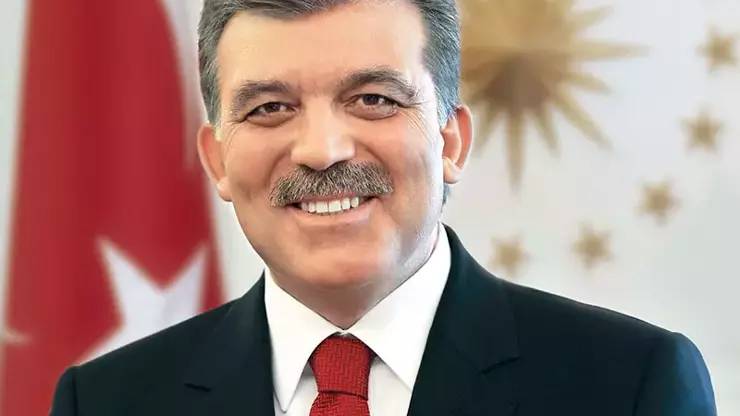
markoinbangkok.com – Abdullah Gül, the 11th President of Turkey, served from 2007 to 2014, playing a key role in the country’s political and judicial transformations. Gül was one of the founding members of the Justice and Development Party (AKP) alongside Recep Tayyip Erdoğan and served in several important government positions, including Prime Minister and Foreign Minister, before becoming president. Known for his pragmatic approach to governance and his efforts to modernize Turkey’s judiciary, Gül’s presidency marked a period of significant political change, constitutional reforms, and advancements in Turkey’s relationship with the European Union.
Gül’s presidency was marked by his focus on strengthening Turkey’s democratic institutions, promoting judicial reforms, and enhancing Turkey’s international standing. He is often credited with advocating for important reforms that were intended to consolidate democracy and the rule of law, as well as efforts to maintain Turkey’s secular identity amidst rising political Islam.
Early Life and Political Career
Abdullah Gül was born on October 29, 1950, in Kayseri, Turkey. He completed his education in economics at Istanbul University and furthered his studies at the University of Exeter in the United Kingdom. Gül’s early career in academia and banking laid the foundation for his future in politics, where he would become a key figure in Turkey’s political landscape.
Gül’s political career began in the 1990s when he was elected to the Turkish Grand National Assembly. He soon emerged as a leading figure in the Welfare Party and later in the Justice and Development Party (AKP), which he helped to establish in 2001, along with Erdoğan and other political figures. Gül served as Turkey’s Foreign Minister and Deputy Prime Minister in the AKP government before being elected as president in 2007.
Becoming President of Turkey
In 2007, Abdullah Gül was elected as the 11th President of Turkey. His election followed a contentious period of political polarization, during which his candidacy faced opposition from secularist groups due to his Islamist-leaning background. Gül’s election was seen as a turning point in Turkey’s political evolution, as it marked the increasing prominence of political Islam in the country’s leadership, even as the secular establishment remained influential.
Despite the tensions surrounding his election, Gül was seen as a moderate and conciliatory figure, able to bridge the divide between Turkey’s secular and religious factions. His election was confirmed by the Turkish Grand National Assembly after a series of political crises, signaling a shift in Turkey’s political landscape, but also a willingness to preserve the country’s democratic institutions.
Judicial Reforms and the Rule of Law
One of the most important aspects of Abdullah Gül’s presidency was his focus on judicial reforms, which aimed to modernize Turkey’s legal system and align it more closely with European Union standards. These reforms were part of a broader effort to strengthen Turkey’s democratic institutions and fulfill the criteria for EU membership, which remained a key goal for Gül throughout his presidency.
Judicial Reforms
Gül’s presidency coincided with a period of significant changes in Turkey’s judiciary. His administration pushed for reforms that aimed to reduce the influence of the military in Turkish politics and strengthen the independence of the judiciary. These reforms were crucial in addressing criticisms that Turkey’s legal system had been used as a tool of political control, particularly in cases related to political opposition and civil liberties.
One of the most notable judicial reforms during Gül’s presidency was the 2010 constitutional amendment referendum, which was supported by Gül and the AKP. The referendum, which passed with overwhelming support, aimed to overhaul Turkey’s judicial system and reduce the influence of the military on political life. It included provisions that would allow for greater civilian oversight of the military and increase the independence of the judiciary by reshaping the structure of Turkey’s Constitutional Court and the Higher Council of Judges and Prosecutors.
Strengthening the Rule of Law
Gül’s presidency also focused on the importance of the rule of law in Turkey’s political development. His legal background and his commitment to democratic principles made him a strong advocate for judicial independence and human rights. Under his leadership, Turkey made significant strides toward aligning its legal and constitutional framework with European Union norms, particularly regarding individual rights, freedom of expression, and the protection of minorities.
During Gül’s time in office, Turkey worked to reform laws that had long been criticized for limiting freedoms of speech, assembly, and press. Although there were still challenges regarding the protection of civil liberties, Gül’s administration pushed for reforms to address some of the country’s most pressing legal issues. His government supported the expansion of personal freedoms and the protection of human rights, although political tensions and restrictions on the press continued to draw criticism from both domestic and international observers.
Foreign Policy and EU Accession
In addition to his domestic reforms, Abdullah Gül’s presidency was also marked by a proactive approach to foreign policy. As a former Foreign Minister, Gül brought a wealth of diplomatic experience to the presidency. He worked to strengthen Turkey’s relationships with both the European Union and the Middle East, balancing Turkey’s traditional alliances with the West while also engaging with its regional neighbors.
European Union Membership
Gül was a staunch advocate for Turkey’s EU accession, and his presidency played an important role in keeping Turkey’s EU ambitions alive. Although progress on EU membership stalled during his time in office, Gül remained committed to the process and pushed for continued reforms to bring Turkey closer to meeting the EU’s political and economic standards.
His efforts were seen as instrumental in maintaining Turkey’s pro-European stance, despite increasing political tensions with some EU member states. Gül believed that Turkey’s future lay within the EU, and he made significant diplomatic efforts to promote the country’s candidacy, especially at a time when Turkey faced opposition from certain European leaders.
Improved Relations with the Middle East
During his presidency, Gül also worked to improve Turkey’s relations with its Middle Eastern neighbors. His government pursued a policy of “zero problems with neighbors,” aimed at fostering better diplomatic and economic ties with countries such as Syria, Iraq, and Iran. Gül’s foreign policy emphasized Turkey’s role as a regional power and its commitment to peace and stability in the Middle East.
This policy of engagement led to a series of diplomatic successes, including Turkey’s increased role in Middle Eastern peace processes and its efforts to mediate between rival factions in the region. However, Gül’s foreign policy was also marked by challenges, including Turkey’s response to the Syrian civil war and its changing relations with the European Union.
Challenges and Political Polarization
Abdullah Gül’s presidency was not without its challenges. Despite his efforts to bridge political divides, Turkey remained a deeply polarized country during his time in office. Tensions between secularists and Islamists continued to shape Turkish politics, and Gül’s attempts to navigate these divisions were often complicated by political conflicts, particularly with the military and secular elites.
In 2007, Gül’s candidacy for president sparked significant opposition from secularist groups, who feared that his background in political Islam represented a shift away from Turkey’s secular traditions. While Gül was able to secure the presidency, his election marked a turning point in Turkish politics, as the influence of political Islam became more apparent.
Gül’s presidency was also marked by tensions within his own political party, the AKP. While he was seen as a moderate figure, the increasing consolidation of power by Recep Tayyip Erdoğan, particularly after Gül’s term ended, led to questions about the future direction of Turkish politics and the role of the presidency.
Legacy
Abdullah Gül’s presidency left a lasting legacy on Turkey’s judicial system and its political landscape. His role in pushing forward judicial reforms, particularly through the 2010 constitutional amendments, helped reshape Turkey’s legal system and reduced the military’s influence over politics. His commitment to EU membership and the strengthening of Turkey’s democratic institutions positioned Gül as a key figure in Turkey’s modern history.
Though Gül’s presidency was often overshadowed by the growing power of Erdoğan and the AKP, his tenure is remembered for its focus on judicial reform, democratic values, and foreign policy. His pragmatic approach to governance and his commitment to Turkey’s modernization continue to influence political discourse in Turkey today.