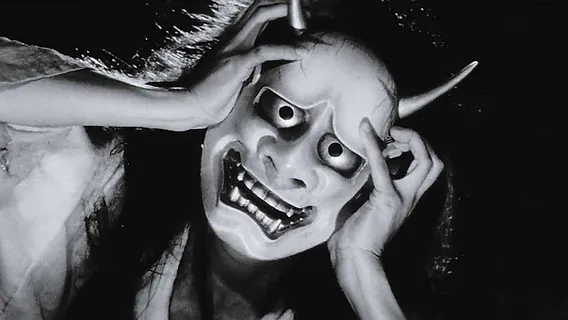
Onibaba (1964) – A Haunting Tale of Desire, Betrayal

markoinbangkok.com – Onibaba (1964), directed by Kaneto Shindo, is one of the most distinctive films to emerge from the Japanese horror genre in the 1960s. Set in the turbulent, war-torn period of feudal Japan, Onibaba masterfully blends elements of folklore, psychological horror, and social commentary to create a timeless and chilling narrative. Its themes of survival, desire, and the human capacity for cruelty and deceit are explored with a stark, minimalist approach that remains influential to this day.

Set against the backdrop of the brutal civil wars of Japan, Onibaba is a haunting tale that defies easy classification. While it incorporates supernatural elements, it is much more focused on the psychological horrors of human nature and the impact of fear and desperation on the psyche.

Plot Overview: Survival and Despair in Feudal Japan

Onibaba centers on two women, a mother-in-law, and her daughter-in-law, who are living in a remote, desolate marshland during a period of war. With the absence of men due to the ongoing conflict, the two women survive by preying on the bodies of dead soldiers, looting their armor, weapons, and valuables. They drag the corpses into the marsh to hide them, and through their ruthless survival tactics, they’ve grown accustomed to the violence and brutality of war.

The narrative takes a dark turn when a soldier, Hachi, returns from the war and seeks refuge in their home. Hachi, a former comrade of the daughter-in-law’s late husband, becomes romantically involved with her, much to the jealousy of the mother-in-law. The tension escalates when the mother-in-law, in an act of desperation, acquires a demon mask from a passing samurai. The mask is said to have the power to hide one’s identity and bring fear to anyone who encounters it.

The mask becomes a symbol of the growing paranoia, fear, and betrayal that permeate the film. As the mother-in-law uses the mask to manipulate and control the others, Onibaba delves deeper into the psychological horror of her actions, turning her into a terrifying figure who preys on the insecurities and desires of those around her. The blurred lines between human evil and supernatural malevolence create a chilling atmosphere that leaves the viewer questioning what is real and what is imagined.

Themes: Desire, Betrayal, and the Human Capacity for Evil

At its heart, Onibaba is a story about the complexities of human desires, and the lengths to which individuals will go to fulfill them, even at the expense of others. The mother-in-law’s jealousy and desire to maintain control over her daughter-in-law become the driving forces of the narrative, with both women trapped in a cycle of survival that ultimately leads to violence and betrayal.

The film explores the darker side of human nature, where fear, greed, and desire push people to commit acts they might otherwise never consider. The mother-in-law, desperate to keep the relationship between Hachi and her daughter-in-law from blossoming into something more, manipulates Hachi’s fear and uses the supernatural power of the demon mask to enact her own twisted form of vengeance.

Onibaba also critiques the social dynamics of feudal Japan, where power, control, and reputation were crucial, especially for women. The isolation of the two women and their struggle to survive in a patriarchal society is reflected in the film’s harsh portrayal of their actions and decisions. The film questions the lengths to which individuals must go to retain their identity and sense of control when all else is stripped away by war and hardship.

The supernatural elements of Onibaba serve as metaphors for the emotional and psychological traumas of the characters. The mask, which represents a kind of false identity, symbolizes the ability to hide one’s true intentions behind a veil of fear, while the demon itself can be interpreted as a manifestation of the fear and guilt that consumes the characters as they move further down a path of betrayal and violence.

Cinematic Style: Stark Visuals and Atmospheric Tension

One of the most striking aspects of Onibaba is its minimalist style. Shot in black and white, the film is marked by stark, expressive visuals that enhance the psychological horror at its core. The use of shadows and light plays a critical role in building the film’s atmosphere. The constant juxtaposition between light and dark reflects the moral ambiguity of the characters and their actions, while the wide-open marshland scenes emphasize the isolation and desolation of the setting.

The film’s cinematography, designed by Kiyoshi Hasegawa, is vital in creating the sense of claustrophobia and dread. The marsh itself, with its swampy, treacherous terrain, becomes a symbol of both physical and psychological entrapment. The characters are not only physically isolated from the rest of the world but are trapped by their emotions, desires, and past decisions. The film’s most haunting sequences occur in the shadows, where the lines between the living and the dead become increasingly blurred.

The unsettling score, composed by Hikaru Hayashi, further amplifies the tension. The music is sparse, relying on haunting melodies and dissonant sounds to create an atmosphere of unease. The silence and absence of sound in key moments heighten the sense of isolation and impending doom that permeates the film.

The Mask: Symbol of Identity and Fear

The demon mask, one of the key plot devices in Onibaba, is not only a physical object but also a profound symbol within the narrative. Initially, the mask is a tool for survival, a means for the mother-in-law to assume a terrifying identity and impose control over her surroundings. However, the mask also represents the broader theme of fear—fear of loss, fear of betrayal, and fear of one’s true identity being exposed.

As the mask is worn, it transforms from a symbol of power to a symbol of degradation. The transformation of the mother-in-law as she dons the mask is pivotal to the film’s exploration of psychological horror. The mask distorts her identity and heightens her monstrous traits, making her both more fearsome and more tragic. It is a visual representation of the descent into madness, as she loses herself in the manipulation and the darkness of her desires.

The mask also serves as a metaphor for the loss of self in the midst of extreme circumstances. The characters are forced to wear masks—both literal and metaphorical—as they navigate a world consumed by war, fear, and desperation. The mask reflects the idea that the true self becomes hidden, lost beneath the layers of guilt, fear, and betrayal.

Legacy and Influence: A Classic of Japanese Horror

Onibaba has left a lasting impact on the horror genre and remains a classic of Japanese cinema. It is often praised for its ability to fuse folklore with psychological horror, creating a film that is both deeply unsettling and profoundly human. The film’s exploration of complex emotions, such as jealousy, desire, and guilt, elevates it beyond the typical horror narrative, making it a compelling and thought-provoking work of art.

The film’s influence can be seen in later works that explore similar themes of isolation, survival, and the supernatural. Its minimalist style and focus on emotional and psychological tension also paved the way for future horror films that emphasized atmosphere over spectacle. Directors such as Takashi Miike and Kiyoshi Kurosawa have cited Onibaba as an important influence in their own work, particularly in their use of psychological horror and symbolic imagery.

In addition to its influence on Japanese horror, Onibaba has been appreciated by international audiences for its haunting beauty and unsettling atmosphere. It remains a must-watch for those interested in the darker side of human nature, and its status as a masterpiece of Japanese cinema endures.

Conclusion: A Timeless Horror Film About Human Desires and the Supernatural

Onibaba is a masterful exploration of human nature, set against the backdrop of a war-torn Japan. Kaneto Shindo’s direction, combined with stark visuals and a haunting atmosphere, creates a deeply unsettling experience that lingers long after the credits roll. The film’s themes of desire, betrayal, and survival, coupled with its supernatural elements, make it a classic that transcends its genre.

By focusing on the psychological horrors of its characters and their desperate need to survive in an unforgiving world, Onibaba remains a powerful and influential film that continues to captivate audiences and inspire filmmakers. Its chilling portrayal of the darker aspects of human nature, paired with its evocative imagery, ensures its place in the pantheon of Japanese horror.

Crazy Joe (1974): ATale of Mob Rivalries and Betrayal

markoinbangkok.com – Crazy Joe (1974), directed by Carlo Lizzani, is a crime drama film that delves into the world of organized crime and the ruthless power struggles within the mob. The film is centered on the character of Joe, a hot-headed and ambitious mobster, played by Peter Boyle. Amidst the violence and betrayal that define the world of the Mafia, the character of Anne, portrayed by [insert actress’s name], plays a significant role. She is entwined in Joe’s chaotic life, offering a glimpse into the personal side of the mob’s underworld. Through Anne’s character, the film explores themes of loyalty, love, and the complex relationships that exist in the dangerous world of organized crime.

Plot Overview: A Mobster’s Rise and Fall

Crazy Joe follows Joe, a New York mobster determined to climb the ranks within the Mafia, even if it means breaking the rules of the organization. The film focuses on his violent pursuit of power, as he becomes embroiled in internal mob rivalries and faces betrayal from those closest to him. His ambitions lead him to make rash decisions, turning his life into a whirlwind of bloodshed and confrontation.

Anne, the character played by [insert actress’s name], enters Joe’s life at a pivotal moment. She serves as a love interest, providing emotional depth to Joe’s otherwise violent and chaotic world. However, her involvement with Joe is far from simple, and she becomes entangled in the dangerous world he inhabits. Anne’s relationship with Joe complicates his already fraught existence, as she is drawn into the power struggles that ultimately define the film’s tragic arc.

Anne: The Tragic Love Interest in a World of Violence

Anne’s character is a complex one. She is not merely a passive love interest, but a woman who is forced to navigate the perilous world of organized crime alongside Joe. Although she is deeply involved in the emotional core of the story, Anne’s role in the film extends beyond being a simple romantic foil. She embodies the tragic consequences of love and loyalty in an environment where trust is fragile and betrayal lurks at every corner.

Her relationship with Joe is marked by moments of tenderness, but it is also fraught with tension, as Anne finds herself caught between her affection for him and the destructive nature of his ambition. She is drawn to Joe’s raw energy and his commitment to climbing the criminal ranks, yet her moral compass stands in stark contrast to his. Anne’s character represents the emotional toll that mob life takes on those who are entangled in it, and she is a symbol of innocence lost in the violent world Joe inhabits.

As Joe’s rise in the Mafia becomes increasingly dangerous, Anne finds herself in the crossfire. Her character serves as both a grounding force in Joe’s life and a victim of the very violence that defines his existence. Her love for Joe becomes a source of conflict, as she is forced to reconcile her feelings with the realization that the world she is now a part of is one of constant danger and betrayal.

Themes of Loyalty, Betrayal, and Corruption

At its core, Crazy Joe is a film about the dynamics of power, loyalty, and betrayal within the Mafia. Anne’s character plays a key role in illustrating how these themes affect the lives of those who are caught up in the underworld. Her relationship with Joe serves as a microcosm of the larger narrative, where personal connections are constantly tested by the violence and ruthlessness of the mob.

The film explores the idea that loyalty in the Mafia is often a fragile concept, with betrayal lurking behind every corner. Joe’s own quest for power leads him to make choices that alienate those around him, including Anne. Her involvement with him forces her to grapple with the ethical and emotional dilemmas that come with loving a man who is so deeply enmeshed in the world of crime.

Anne’s journey in Crazy Joe is a tragic one. She begins as a woman who seems to believe in the possibility of a life with Joe outside the realm of organized crime, but as Joe’s actions become more reckless, she is forced to confront the harsh realities of his world. Anne becomes a symbol of the destructive consequences of the mob lifestyle—not only on those directly involved in crime but also on those who become ensnared in its web.

The Dark World of Organized Crime in 1970s Cinema

Crazy Joe was released during the 1970s, a decade that saw a surge in crime films reflecting the societal disillusionment of the time. The film’s portrayal of the Mafia is in line with other films of the era that sought to present organized crime as a morally ambiguous world where personal ambitions and loyalty clash with the realities of violence and corruption.

Anne’s role in the film highlights the emotional cost of being involved with individuals who are part of the criminal underworld. Her relationship with Joe demonstrates how the corrupting influence of crime can extend beyond the individuals directly involved, affecting those who are close to them. In this way, Anne serves as both a character caught in a toxic relationship and a witness to the devastating consequences of a violent, morally bankrupt world.

The Legacy of Crazy Joe and Anne’s Role in the Narrative

While Crazy Joe did not achieve widespread commercial success, it remains an important part of the 1970s crime film genre. The film captures the gritty realism and moral ambiguity that characterized many of the era’s crime dramas, and Anne’s character is an integral part of its exploration of love, loyalty, and betrayal in the Mafia.

Anne’s impact on the narrative is lasting, as she provides a humanizing force in Joe’s otherwise brutal world. Her role as a love interest is more than just a romantic subplot; she is a character who forces Joe to confront the consequences of his actions and the limits of his ambition. Through her, the film explores the emotional toll that crime and violence can have on personal relationships, making Anne a pivotal figure in the story.

Conclusion

Crazy Joe (1974) is a gritty crime drama that explores the complex relationships and power struggles within the Mafia. Anne’s character, played by [insert actress’s name], serves as a tragic love interest whose involvement with Joe highlights the emotional and moral complexities of life in the criminal underworld. Her relationship with Joe is marked by both tenderness and tension, as she navigates the dangers and betrayals that come with loving a mobster. Through Anne’s character, the film explores the themes of loyalty, betrayal, and the devastating consequences of the violent world Joe inhabits, making her an essential part of the narrative’s emotional and moral framework.

The Cursed Sword: A Blade of Blood and Betrayal

markoinbangkok.com – The Cursed Sword, a legendary weapon steeped in a history of violence and treachery, has left a trail of bloodshed in its wake. This article explores the dark legacy of this infamous blade, examining the tales of betrayal and the cursed fates of those who have wielded it, from ancient times to the present day.

The Forging of the Cursed Sword

The origins of the Cursed Sword are shrouded in mystery, with some accounts suggesting it was forged by a blacksmith who sold his soul to the devil in exchange for unparalleled skill. The blade is said to have been crafted from a meteorite, imbued with dark magic, and quenched in the blood of innocents, giving it a thirst for blood that could never be sated.

A Legacy of Betrayal

Throughout its existence, the Cursed Sword has been a tool of betrayal, turning allies into enemies and sowing discord wherever it is wielded. Kings have fallen, empires have crumbled, and countless lives have been lost to the blade’s insatiable hunger for carnage.

The Cursed Fates of Its Wielders

Those who have taken up the Cursed Sword have often met with tragic ends. The blade is said to corrupt the very soul of its bearer, driving them to commit acts of unspeakable violence before ultimately leading to their downfall. The sword’s legacy is one of bloodshed and sorrow, with each wielder’s fate a grim reminder of the price of power.

The Sword’s Journey Through History

The Cursed Sword has passed through the hands of many, from legendary warriors to despotic tyrants. Each chapter in its history is marked by conflict and tragedy, with the blade serving as a catalyst for some of the most brutal events in human history.

The Sword’s Current Whereabouts

The current location of the Cursed Sword remains a mystery. Some believe it lies hidden in an ancient tomb, while others suspect it has been destroyed to prevent further bloodshed. Despite its absence, the sword’s legacy continues to haunt those who seek to understand the true extent of its power.

Conclusion

The Cursed Sword stands as a testament to the dangers of unchecked ambition and the corrupting influence of power. Its story is a cautionary tale, warning of the consequences of wielding a weapon that demands blood and brings only betrayal and sorrow. As the blade’s whereabouts remain unknown, the legend of the Cursed Sword continues to inspire both fear and fascination, a chilling reminder of the darkness that lies within the heart of humanity.